Why Your Body Begs for a Nap at 4 P.M. (and How to Fix It Without Another Coffee)
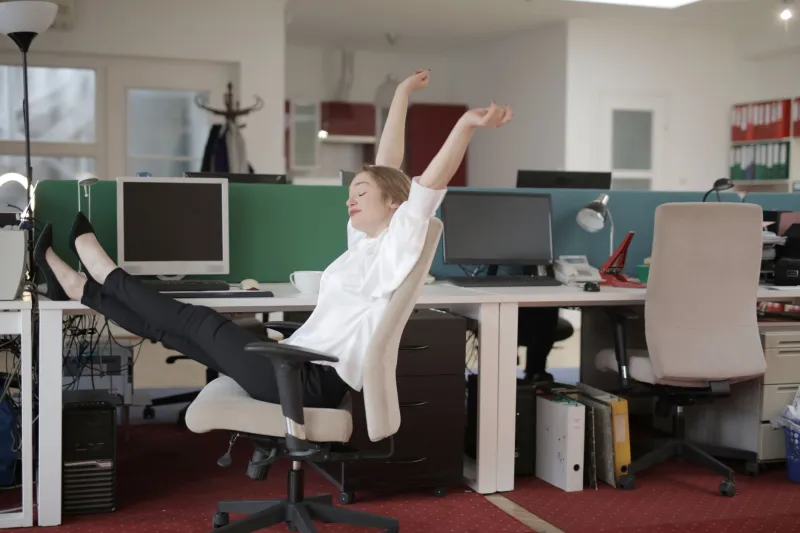
It's 4 P.M. and you're staring at your screen like it owes you money. Your brain feels wrapped in gauze, your eyelids have opinions, and the vending machine down the hall is whispering your name.
Here's the good news: you're not broken, undisciplined, or lazy. The afternoon crash is one of the most predictable rhythms in human physiology — and the way most of us respond to it (more caffeine, more sugar, more slumping) makes it worse. Let's figure out what's actually happening and how to work with your body instead of against it.
The Crash Isn't a Bug — It's a Feature You're Feeding
Humans have a natural dip in alertness in the early-to-mid afternoon. It's baked into our circadian rhythm, separate from lunch, and it happens even to people who skip meals entirely. But modern habits pile on top of it:
- The blood sugar rollercoaster. A sandwich, chips, and a sweet drink at noon sends glucose soaring, then plummeting. That plummet lands right around 3 P.M., amplifying the natural dip into a full-blown crash.
- Dehydration. Most Americans run mildly dehydrated by mid-afternoon, and even slight dehydration measurably tanks focus and mood.
- Screen fatigue. Hours of near-focus without breaks strains your eyes and dulls your attention.
- Shallow breathing. Slouched at a desk, we take small, lazy breaths. Less oxygen in, less alertness out.
None of these require a supplement aisle to fix.
Rebuild Lunch Around Protein, Not Willpower
The single highest-leverage change for most people is what's on their plate at noon. Instead of the carb-heavy default — a bagel, pasta salad, a 'light' frozen entrée — build lunch with a simple formula:
Protein first, then fiber, then smart carbs.
Think a palm-sized portion of chicken, salmon, eggs, or lentils; a big handful of vegetables; and a modest scoop of quinoa, sweet potato, or whole-grain bread. Add a little healthy fat from avocado or olive oil. This combo digests slowly, which means glucose stays level instead of spiking and diving.
A practical swap: if you love your turkey sandwich, keep it, but add a side of veggies and swap the chips for a handful of almonds. You don't need a food-science degree — just shift the ratios.
The 10-Minute Walk That Outperforms a Latte
After lunch, your body wants to move glucose into cells — and movement is how you help it. A short, easy walk within 30 minutes of eating blunts the blood sugar spike significantly, according to a growing body of research. No power-walking required. A casual loop around the block or even laps of your office hallway count.
Make it a ritual: lunch, walk, then back to your desk. Ten minutes. Do it for a week and notice whether the 3 P.M. fog thins out. Most people are surprised by how much of their crash was actually post-lunch blood sugar, not 'just being tired.'
Rethink the Third Coffee
By mid-afternoon, that extra cup isn't just keeping you awake — it's borrowing energy from your evening. Caffeine has a half-life of five to six hours, which means a 3 P.M. coffee is still hanging around at bedtime, quietly eroding the sleep that would have made tomorrow's afternoon easier. It's a cycle.
If you want something warm in your hand, try:
- Peppermint tea — its aroma alone has been shown to nudge up alertness.
- Ginger tea — warming, digestive-friendly, and a nice post-lunch companion.
- Green tea — if you still want a little caffeine, it delivers a gentler lift with L-theanine for calm focus.
Light, Air, and Breath: The Free Stuff
A few overlooked levers:
- Get bright light early. Ten minutes of morning daylight anchors your circadian rhythm, which makes the afternoon dip shallower. Step outside with your morning coffee instead of scrolling by a window.
- Look away every 20 minutes. The 20-20-20 rule (every 20 minutes, look at something 20 feet away for 20 seconds) genuinely reduces eye strain and mental fatigue.
- Breathe like you mean it. Try a round of slow breaths — four counts in, six counts out — a few times in the afternoon. Longer exhales signal your nervous system to shift out of that wired-but-tired state.
- Crack a window or step outside. Stuffy, warm indoor air is quietly sedating. Fresh, cooler air is a legitimate pick-me-up.
The 4 P.M. Protocol, Summed Up
- Eat a protein-forward lunch with fiber and fat.
- Walk 10 minutes within half an hour of eating.
- Swap the third coffee for peppermint or ginger tea.
- Get morning light, take screen breaks, and breathe deeply when the fog rolls in.
None of this is glamorous, and that's the point. The afternoon slump isn't a character flaw — it's a signal. Answer it with rhythm, food, and movement instead of a vending machine run, and 4 P.M. stops being the hour that eats your day.