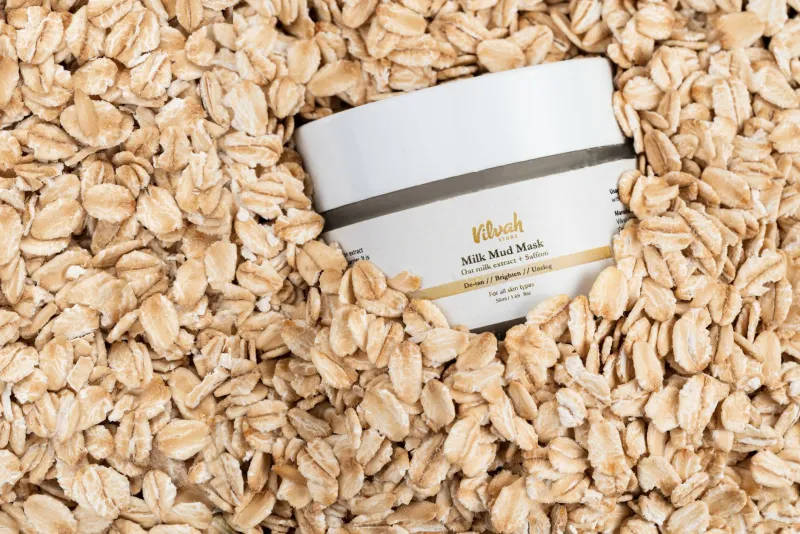
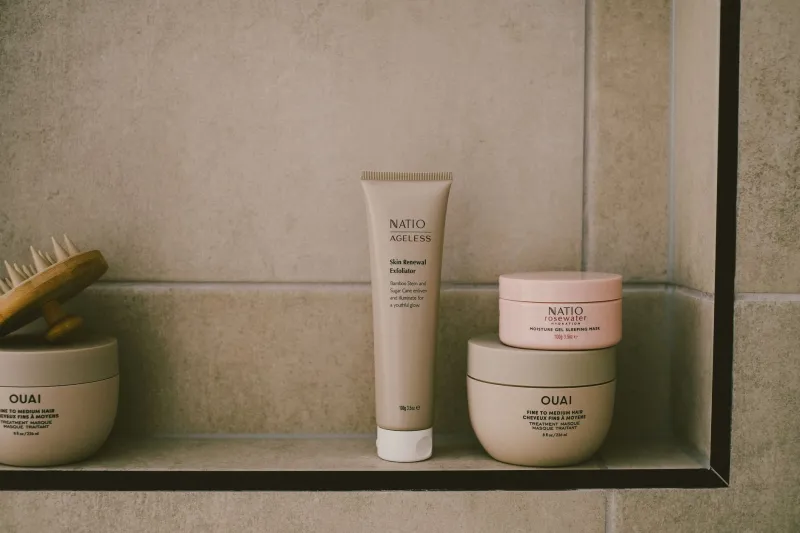
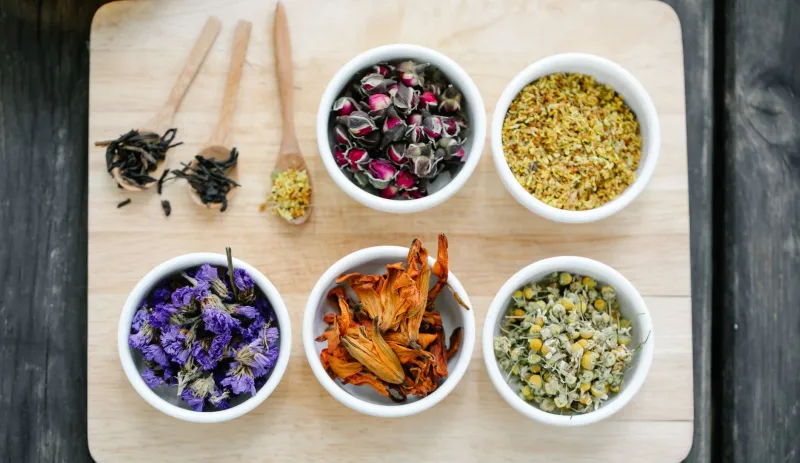
Greenwashed and Confused: What Your Moisturizer's Ingredient List Is Actually Telling You
I used to buy skincare the way I bought cereal: by the words on the front of the box. Botanical blend! Infused with chamomile! Clean, natural, gentle. It wasn't until I started making my own calendula salve that I flipped a jar over and realized I couldn't make sense of half the list on the back. Turns out, that's by design.
The front label is marketing. The back label is legally required truth — sort of. Once you learn a few tricks, that dense little ingredient list becomes the most honest thing on the package.
Why 'Natural' on a Label Means Almost Nothing
Here's the uncomfortable truth: in the US, the FDA doesn't regulate the word "natural" on cosmetics at all. Neither does "clean," "non-toxic," or "chemical-free" (which is technically impossible — water is a chemical). A brand can stamp a leaf on the bottle, name it after a meadow, and still fill it with synthetic fragrance and fillers.
What is regulated: the ingredient list, which must follow a standardized system called INCI (International Nomenclature of Cosmetic Ingredients). Every ingredient gets listed by its technical name, in descending order of concentration — with one big exception we'll get to.
So while the front of the bottle shouts "ALOE-ENRICHED," the back might reveal aloe sitting at position fifteen, tucked below three different silicones.
Reading an INCI List Like an Herbalist
Herbalists read plant names the way sommeliers read wine labels — with attention to what's actually present and in what quantity. Here's your step-by-step method:
Step 1: Check the first five ingredients. These typically make up the bulk of the formula. If the hero botanical from the front label isn't up here, it's mostly a marketing story.
Step 2: Know the Latin. Calendula officinalis is calendula. Chamomilla recutita is chamomile. Plant ingredients are listed by their Latin binomials, which is actually great news — once you learn a handful, you can spot real botanicals instantly.
Step 3: Decode the 'under 1%' trick. Here's the exception I mentioned: once an ingredient drops below 1% concentration, the brand can list the rest in any order. That's why you'll see a long parade of trendy extracts — niacinamide! peptides! green tea! — clustered at the end. Any of them could be present at a cosmetic 0.001%. If a buzzy ingredient appears after the preservative, it's likely there for the label, not your skin.
Step 4: Find the preservative. Phenoxyethanol, sodium benzoate, potassium sorbate — preservatives usually mark the 1% line. Everything after it is garnish.
**Step 5: Match claims to the list." Fragrance-free? Then "parfum" or "fragrance" shouldn't appear. "Unscented" just means no added scent aroma — it can still contain masking fragrances that neutralize odor.
The Greenwashing Red Flags Hiding at Your Local Drugstore
Walk down any skincare aisle at a Walgreens or Target and you'll spot these patterns within minutes:
- The extract parade. Ten plant extracts listed after the preservative. That's a sprinkle, not a formula.
- 'With real [ingredient]' framing. "With real cucumber extract" can mean 0.5% cucumber in a sea of glycerin and dimethicone.
- Nature-styled packaging. Kraft paper labels, serif fonts, pastel greens. The design is doing the work the formula isn't.
- 'Fragrance-free' plus 'parfum.' A direct contradiction that's technically allowed because of masking-fragrance loopholes.
- The generic 'plant blend.' Vague terms like "botanical complex" without naming species are a dodge, not a disclosure.
None of this means every drugstore product is bad — plenty are solid, well-formulated, and affordable. It just means the marketing language deserves your skepticism, and the INCI list deserves your attention.
Your Screenshot-and-Shop Checklist
Save this for your next shopping run:
- Hero ingredient in the top five? If not, the front label is fiction.
- Latin plant names present? Real botanicals are listed botanically.
- Locate the preservative. Ingredients after it are likely under 1%.
- 'Fragrance' or 'parfum' on a 'fragrance-free' product? Walk away.
- Specific species named (not just 'plant extract')? Good sign.
- Claims match the list? 'Soothing' should mean soothing ingredients, not just aloe-scented marketing.
- Can you pronounce most of it? Not a perfect rule, but a decent gut check — with the caveat that tocopherol (vitamin E) and squalane (olive-derived) are perfectly lovely unpronounceables.
The Bottom Line
The most natural thing about most 'natural' skincare is the font on the label. But you don't need to memorize chemistry to shop smarter — you just need to flip the bottle over, find the preservative line, and ask one question: is the good stuff actually in here, or just on the box?
Once you start reading lists instead of leaf logos, you'll never look at the skincare aisle the same way again. And honestly? That's the whole point.